Newborn Baby Passing Stool Like Balls and Very Hardly
 You'll probably never care about (or talk about) poop as much equally you volition when you're a new parent. From color to texture to odor, you might observe yourself sometimes wondering, "Is this normal?" That's a skillful thing! "The extra attention to stool is very well-deserved," says Laura Jana, Dr., co-author of Heading Abode with Your Newborn: From Birth to Reality. "Your babe'south poop tells a whole lot almost how he or she is doing with eating."
So get over any squeamishness yous might take and bank check out this important baby poop info.
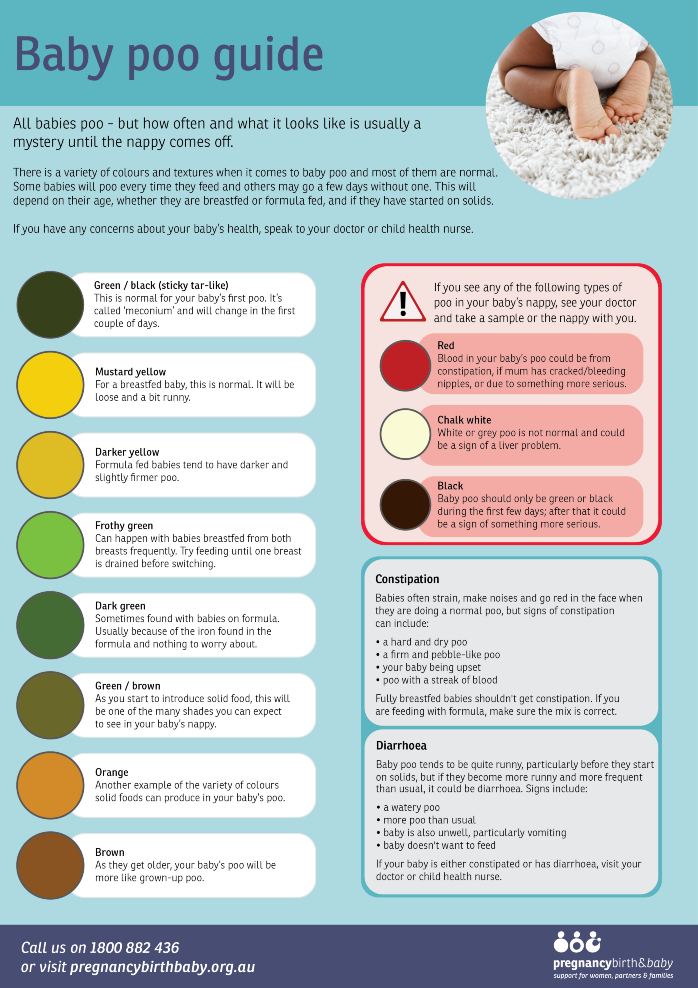
What information technology is: Meconium
When: Within the 24 hours afterward birth
What you need to know: Yous've probably never seen something as viscid, thick, tar-similar and greenish-black equally your child'due south first poop. Meconium is "what's been sitting within the intestines while the baby is forming," says L.E. Wolovits, MD, a general pediatrician at Children'southward Medical Center in Dallas and an assistant professor of Pediatrics at UT Southwestern Medical School. It is a combination of amniotic fluid, mucus, and miscellaneous cells that were shed during the baby's development. It'due south as well VERY messy and sticky! Expect to be cleaning upwardly a meconium mess for at to the lowest degree a little while. The practiced news? The meconium phase only lasts a few days.
What it is: Transitional stool
When: Days 1- 5 (or so)
What you demand to know: Over the first few days of life outside the womb, you lot'll notice your baby's poop changing from the tarry meconium to something lighter colored and non quite so sticky. Their poop may fifty-fifty look completely different from i diaper to the next. Information technology takes fourth dimension for your baby to empty out their pre-natal waste. In the meantime, they're starting to accept in fluids — colostrum and breastmilk (or formula). New food in = old poo out. How apace your baby passes through this stage depends completely on how much they take in. If they nurse a lot and your milk comes in on day two, the transitional poop stage may only last a twenty-four hours or so. If it takes them longer to proceeds their ambition, the transitional stage could last until the finish of the get-go week.
What information technology is: Breast milk poo
When: As long equally your baby is exclusively breastfed
What you demand to know: "The best description I ever heard of breastfed stool is that information technology's like mustard being shot out of a cannon," says Dr. Wolovits. Chest milk poop can indeed exist that yellowish. And it tin can definitely come with some force behind information technology! About every veteran parent has a story of being hit by projectile poop, and then take our advice: take a new diaper ready to become as soon as y'all remove the soiled one. It can help to slide the new diaper underneath before removing the old one, too. Breast milk poop is yellow-dark-green and seedy. It's not formed (meaning information technology'south adequately runny) — only it's not exactly liquid either. The color and consistency may change slightly from day to day, only in general, information technology's squishy, yellow-hued and fairly non-offensive. Chalk it up as another benefit of breastfeeding: breast milk poo doesn't stink like formula poo does. In fact, it has a unique smell that'south sometime described as sugariness or yeasty.
What it is: More than muddy diapers in one day than y'all can peradventure imagine
When: Early newborn period
What you demand to know: Super frequent pooping is 100 percent normal! Some babies, especially breastfed newborns, "eject every time they eat," says Dr. Jana. That's because babies, like adults, have a gastrocolic reflex. This just means that the act of eating triggers abdominal activity — which, in plough, triggers the need to poop. Just don't worry: equally your baby gets older, they're better able to hold their poop. Things will slow downwards around month two and you lot won't exist changing 20 diapers a day.
What information technology is: Formula poop
When: As presently as formula feeding is established
What you need to know: Formula fed babies usually accept soft, tan poops. (Some people draw information technology as like peanut butter – gross, we know!) Don't even attempt to compare your infant'southward formula fed poops to the poops of a breastfed infant. Your baby's stools will be more solid (but still mushy) and definitely more than smelly.
What it is: Frothy green poop
When: Rare
What you lot demand to know: Dark-green, frothy stools are ofttimes a sign of a foremilk/hindmilk imbalance in a breastfed baby, so if you see foamy dark-green poo, telephone call your pediatrician or lactation consultant. Foremilk, the get-go milk you lot baby gets during a feeding, is thin and watery. Hindmilk is thicker (think of milk with foam) and contains far more than fat and calories. Green frothy poop is typically the result of too much foremilk (and not enough hindmilk). Letting your babe decide when to finish feeding (instead of switching them after a pre-adamant time) may resolve this problem.
What it is: Could be claret — or nil
When: Rare
What you lot need to know: A little fleck of blood in your babe'due south poop, specially if the stool seems harder than usual, is typically no large bargain. "If your baby is acting completely fine and eating okay, you can probably wait to call the doctor," says Dr. Wolovits. (Of course, you should always phone call a pediatrician near you if yous're concerned.) If the blood is mixed with the stool, however, call your pediatrician as before long as possible — just to be on the prophylactic side. If your babe is older and eating solids, think long and hard about what he'southward had to eat recently before panicking at the sight of reddish-colored poop. Some foods (beets, for instance) can turn their poop a lovely shade of magenta.
What it is: Chalky white poop
When: Extremely rare
What y'all need to know: White poop is non normal, so "if you see it, you need to say something," Dr. Jana says. It may be a sign of undiagnosed liver illness that needs to be addressed every bit before long every bit possible by your pediatrician.
What it is: Black-tinged poop
When: Quondam after the meconium period
What you need to know: If your infant'due south poops have been normal colored (yellow-greenish for breastfed babies, tan for formula-fed babies) and suddenly transition to a dark blackness color, give your doc a call. That blackness color may be an indicator of bleeding somewhere in the digestive tract, Dr. Jana says. Typically, semi-disgested blood volition come out blackness instead of red. One pocket-sized caveat: iron supplements tin can turn the poop blackness too, so if your baby has recently started an iron supplement a black poop may exist normal.
What information technology is: Fungus-streaked poop
When: Virtually common when baby is teething or has a common cold
What you need to know: "When babies are teething, they take increased drool and saliva and the stools may look a little more than slimy or mucusy," Dr. Wolovits says. Increased drool ways more drool to swallow, which in turn (of form) ways more than drool in the diaper. This peculiarly holds true when your infant has a cold. If they have fungus running downward the back of their nose and pharynx, the odds are good that you'll meet it in their diaper. Sometimes mucus in the stool can indicate infection. In that case, the poop volition take a funny odor and may be a dissimilar color. (Trust us: you'll know.)
What it is: Solid food poop
When: Later starting solids
What you need to know: Expect diaper duty to become decidedly stinkier subsequently your baby starts solids. The poop will also change colour and consistency. Watch out: rice cereal, in particular, can exist constipating. If your baby is having trouble, you lot should consider switching to oatmeal baby cereal. Colour-wise, expect a LOT of variation. Carrots tint the poop orangish, blueberries turn it bluish-purple… you get the picture.
What it is: Poop with undigested $.25 of food
When: After starting "existent nutrient"
What you need to know: It'south not uncommon — or a sign of trouble — to find whole pieces of food in your older babe's poop. "When y'all change the diaper, y'all may actually run across corn and raisins and bizarre chunks of food," Dr. Wolovits says. That's partly because your baby doesn't accept many teeth. It's pretty hard to chew your nutrient thoroughly when you don't accept the necessary equipment!
What it is: Loose, watery poop (diarrhea)
When: Usually the result of a bacterial (or viral) infection
What you lot need to know: If it's wintertime and your babe has a slight fever and green, really evil-smelling, really watery poop, he probably has rotavirus — the most common cause of severe diarrhea in babies. Nutrient allergies, antibiotics, parasites and other infections can also crusade diarrhea, so if your baby has had diarrhea for more than a twenty-four hours or so, phone call your local pediatrician! Dehydration is a real threat! Make certain you are trying to push the fluids if at all possible. If your baby develops a rash, feel gratuitous to apply a liberal amount of diaper cream to soothe their sore lesser! Chafing and broken skin in this tender area can also atomic number 82 to a secondary infection if gone untreated.
What it is: Difficult, dry stools (and sometimes constipation)
When: On occasion. Starting solids may cause constipation.
What you need to know: The number of days between poops is not a reliable indicator of constipation. "Some babies tin can go a week without pooping and be fine," Dr. Jana says. "Other babies are constipated after ii days." And so instead of looking at the agenda with a furrowed brow, inspect your baby'southward poops. If they're soft, all is well. If they're hard, formed, and dry (like little rabbit pellets), they're probably constipated. Try switching cereals; rice cereal is more constipating than barley or oatmeal. Y'all can also attempt calculation fruits and veggies if y'all've already started solids. In that location's no harm in giving your local pediatrician a phone call, either.
MacKoul Pediatrics is an astonishing local pediatrics office in Cape Coral, FL where caring, compassionate doctors and nurses work with you to keep your children every bit healthy every bit possible. MacKoul cares for children from nativity to college historic period, from Greatcoat Coral, Fort Myers, Naples, and beyond.
January 9, 2015
Source: https://www.mackoulpediatrics.com/14-Types-Of-Baby-Poop-And-What-They-Mean.php
0 Response to "Newborn Baby Passing Stool Like Balls and Very Hardly"
Postar um comentário